
Feline calicivirus (FCV) and feline panleukopenia virus (FPV, also called feline distemper or feline parvovirus) are two of the most common serious infections in cats and kittens in Lahore. Both are highly contagious, both are covered by the core cat vaccine, and both can make a kitten very sick very quickly. They look different, though: calicivirus mostly attacks the mouth, nose and eyes, while FPV attacks the gut and the cells that fight infection.
Saqi Mobile Vet Services brings assessment and supportive treatment to your door, which keeps a sick cat calm, avoids carrying infection into a waiting room, and lets us see the home where the virus may be lingering. This page explains the symptoms, how each virus spreads, and what we do. For a deeper look at recovery, read our guide to Feline Calicivirus treatment and cure.
Call us straight away if
A kitten is vomiting or has diarrhoea, a cat has not eaten for a day or more, breathing looks fast or laboured, gums are pale or yellow, the face or paws are swollen, or a cat sits hunched over the water bowl without drinking. These can progress within hours.
Symptoms of Feline Calicivirus
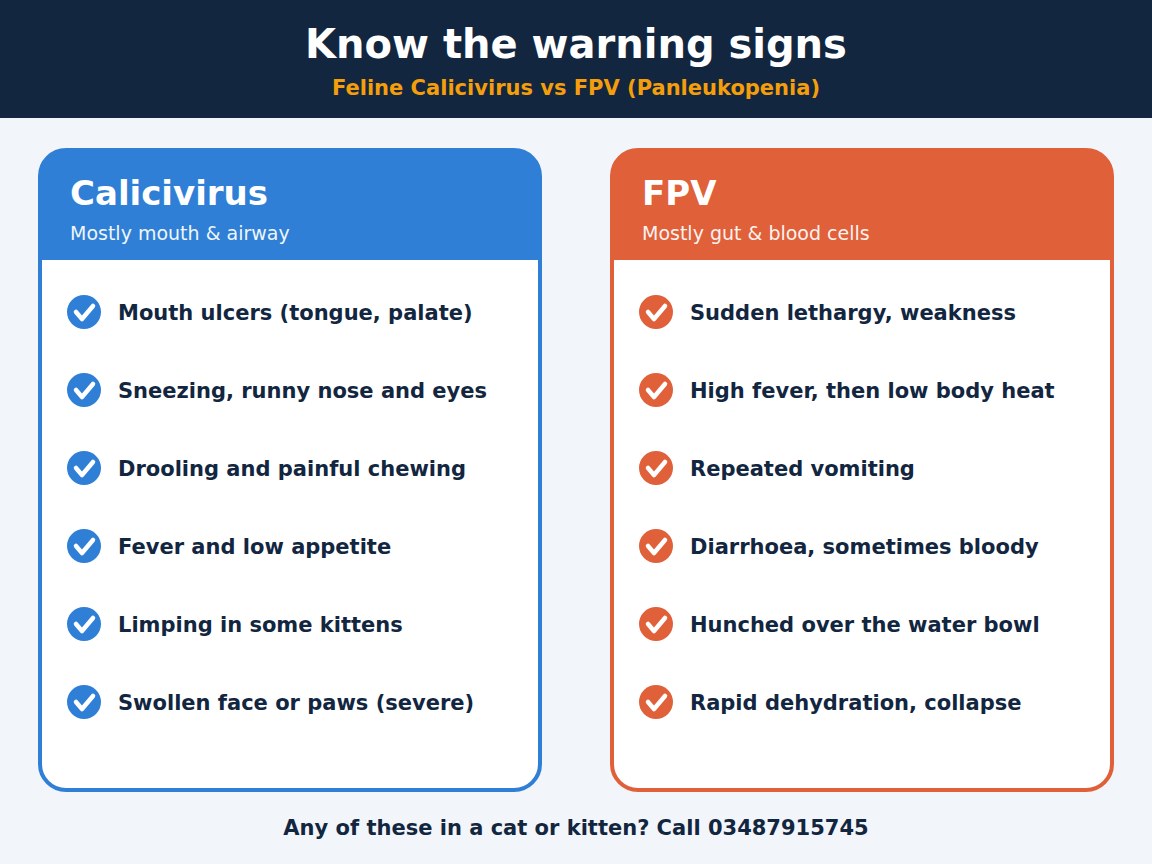
Calicivirus signs range from mild to severe. Many cats look like they have a bad cold, but the mouth ulcers are the clue that separates it from other cat flu viruses.
✓Mouth ulcers
Painful sores on the tongue, gums, palate or lips are the classic sign of calicivirus and often the first thing owners notice as drooling or dropping food.
✓Sneezing and nasal or eye discharge
Runny nose, watery or sticky eyes and sneezing, similar to other cat flu viruses, sometimes with a mild fever.
✓Loss of appetite
Mouth pain and a blocked nose (cats eat by smell) make many cats stop eating, which quickly becomes a problem in kittens and small cats.
✓Limping or stiffness
Some kittens develop a short-lived, shifting lameness with fever, often a few days after infection or vaccination with a live vaccine.
✓Pneumonia in kittens
Fast breathing, open-mouth breathing or a cough in a young kitten needs urgent attention.
✓Virulent systemic calicivirus (rare)
Facial and paw swelling, crusting ulcers on nose, lips, ears and paws, jaundice and high fever. This severe form can affect adult cats and is an emergency.
Symptoms of FPV (Feline Panleukopenia)
FPV attacks cells that divide quickly, so the intestine and bone marrow suffer most. Unvaccinated kittens are at highest risk, and the disease can be fatal without prompt treatment. A kitten infected before birth or very early in life can also be born with a wobbly, uncoordinated walk.
✓Sudden lethargy and weakness
Cats go quiet, hide and sleep more. In kittens this can happen within hours.
✓High fever
Fever early on, followed by a drop in body temperature as the cat becomes very ill.
✓Vomiting
Repeated vomiting, often yellow or foamy, and refusal of food.
✓Diarrhoea
Watery diarrhoea, which may contain blood, with a strong smell.
✓Hunched at the water bowl
Many cats sit over the bowl wanting to drink but unable or unwilling to, a well-known warning sign.
✓Dehydration and collapse
Sunken eyes, dry gums and cold limbs. Kittens can deteriorate and die very quickly without treatment.
How Feline Calicivirus and FPV Spread
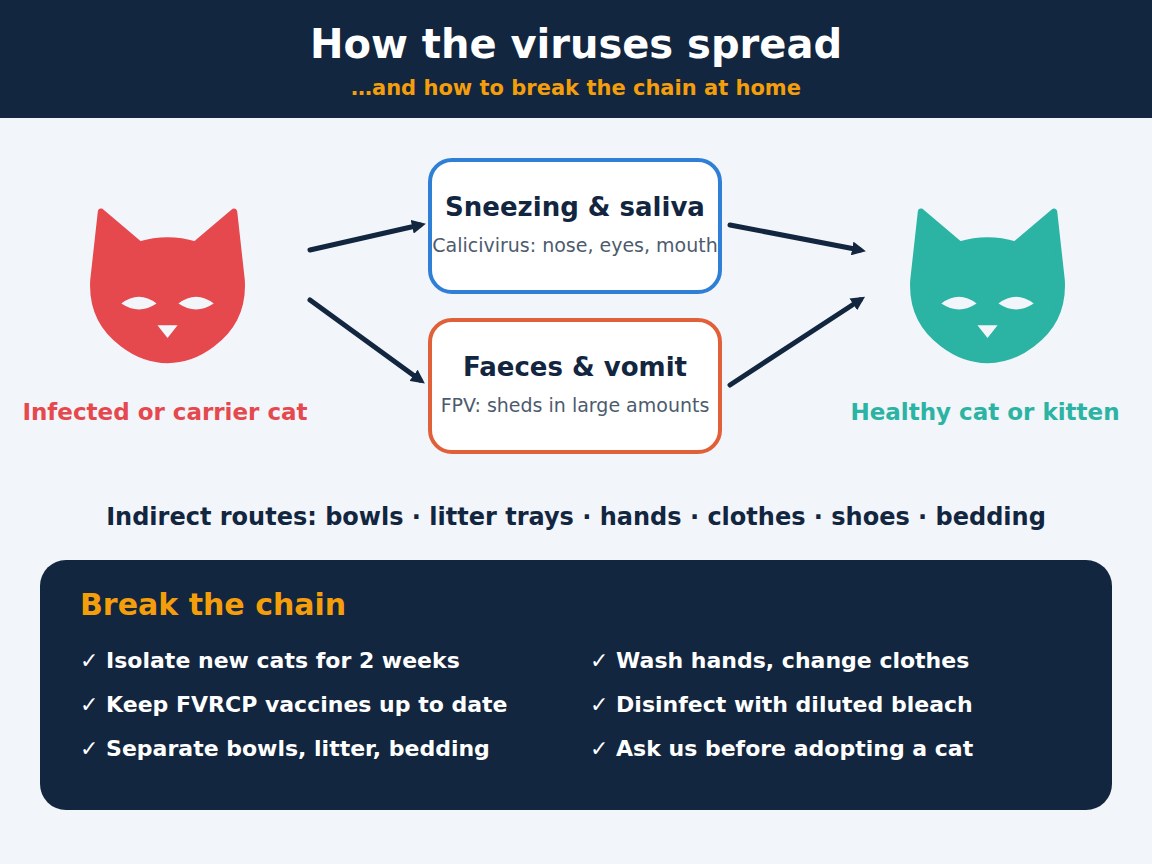
Both viruses pass from cat to cat, and both can also travel on objects and people, which is why one sick cat can put a whole household at risk.
- ✓Direct contact. Calicivirus spreads through sneezing and contact with saliva, nose and eye discharge. FPV spreads through faeces, vomit, urine and saliva.
- ✓Shared items. Food and water bowls, litter trays, bedding, toys and carriers can all carry virus.
- ✓People. Hands, clothes and shoes can carry both viruses from a sick or recently exposed cat to a healthy one.
- ✓Carrier cats. Some cats that recover from calicivirus keep shedding it for months or longer without looking sick. Stray cats, shelters and multi-cat homes are common sources.
- ✓Mother to kittens. A queen infected with FPV during pregnancy can pass it to her kittens before birth.
- ✓A long-lived environment. FPV can survive in a contaminated home for months, sometimes up to a year. Calicivirus can last up to about a month on surfaces and resists many common cleaners.
Calicivirus vs FPV at a Glance
| Feline Calicivirus | FPV (Panleukopenia) | |
|---|---|---|
| Type of virus | Calicivirus (RNA virus) | Parvovirus (DNA virus) |
| Main target | Mouth, nose, eyes, sometimes lungs and joints | Gut lining, bone marrow and immune cells |
| Typical signs | Mouth ulcers, sneezing, discharge, drooling | Lethargy, vomiting, diarrhoea, dehydration |
| How it spreads | Sneezing, saliva, shared bowls, hands and clothing | Faeces, vomit, contaminated surfaces, hands and shoes |
| Survives in the environment | Up to about a month on surfaces | Months, sometimes up to a year |
| Most at risk | Kittens, shelter and multi-cat homes | Unvaccinated kittens (about 2 to 6 months) and unvaccinated adults |
| Core vaccine covers it | Yes (FVRCP), reduces severity | Yes (FVRCP), very effective |
Feline Calicivirus & FPV Care We Offer
✓Home examination and triage
A full check of mouth, eyes, nose, chest, hydration and temperature at your Lahore address, so we can tell how serious the case is without a stressful car journey.
✓Home testing support
Bloodwork and a stool or swab sample when needed. A low white cell count supports FPV, and we explain what results mean for your cat. See CBC/LFT blood testing at home.
✓Fluids, injections and medication
Subcutaneous or IV fluids, anti-nausea and pain relief, and antibiotics only where there is a secondary bacterial infection. See IV drips & injections.
✓Nutrition and mouth care plan
Practical feeding advice for cats with painful mouths, plus appetite support and syringe or tube feeding guidance when needed.
✓Isolation and disinfection guidance
A clear plan to separate the sick cat, protect other cats in the house, and clean surfaces with products that actually work against these tough viruses.
✓Vaccination and kitten protection
Core cat vaccination schedules for kittens and adults, plus advice before you adopt or bring home a new cat. See Vaccination.
How it works
- 1
Call and describe the signs
Tell us the age of the cat, vaccination history, and whether there is sneezing, mouth ulcers, vomiting or diarrhoea. We will say whether to come the same day.
- 2
Home assessment
We examine your cat, check hydration and temperature, and collect samples if needed, while advising you how to keep other cats safe.
- 3
Start supportive treatment
Fluids, medication and a feeding plan begin straight away. Severe cases, especially FPV, may need continuous IV fluids, and we will tell you honestly if that is better done in a hospital.
- 4
Recheck and recovery plan
We follow up until your cat is eating and stable, then plan vaccination, deep cleaning and safe introduction of any new cats.
Prevention
Core vaccination is the best protection. Kittens normally start at 6 to 8 weeks and have boosters every 3 to 4 weeks until about 16 weeks, then a booster at one year and regular boosters after that. Keep new cats apart from resident cats for two weeks, use separate bowls and litter for sick cats, and disinfect with diluted household bleach or a veterinary virucidal disinfectant. Ordinary soap and many standard disinfectants do not reliably kill these viruses. Book a vaccination visit to check your cat is protected.
Pricing
Cost depends on how sick the cat is, the number of home visits, whether tests are needed, and whether IV fluids or injections are required. We give you the cost before we start any treatment.
Read next
Feline Calicivirus Treatment and Cure: what helps, what does not, how long recovery takes and how to clean your home.